Student Project
PROJECT INFO
Duration
6 Monate
Team Size
1 Person
Platform
PC (Windows)
Engine
Unreal Engine 5.6
Local Multiplayer
Gameplay
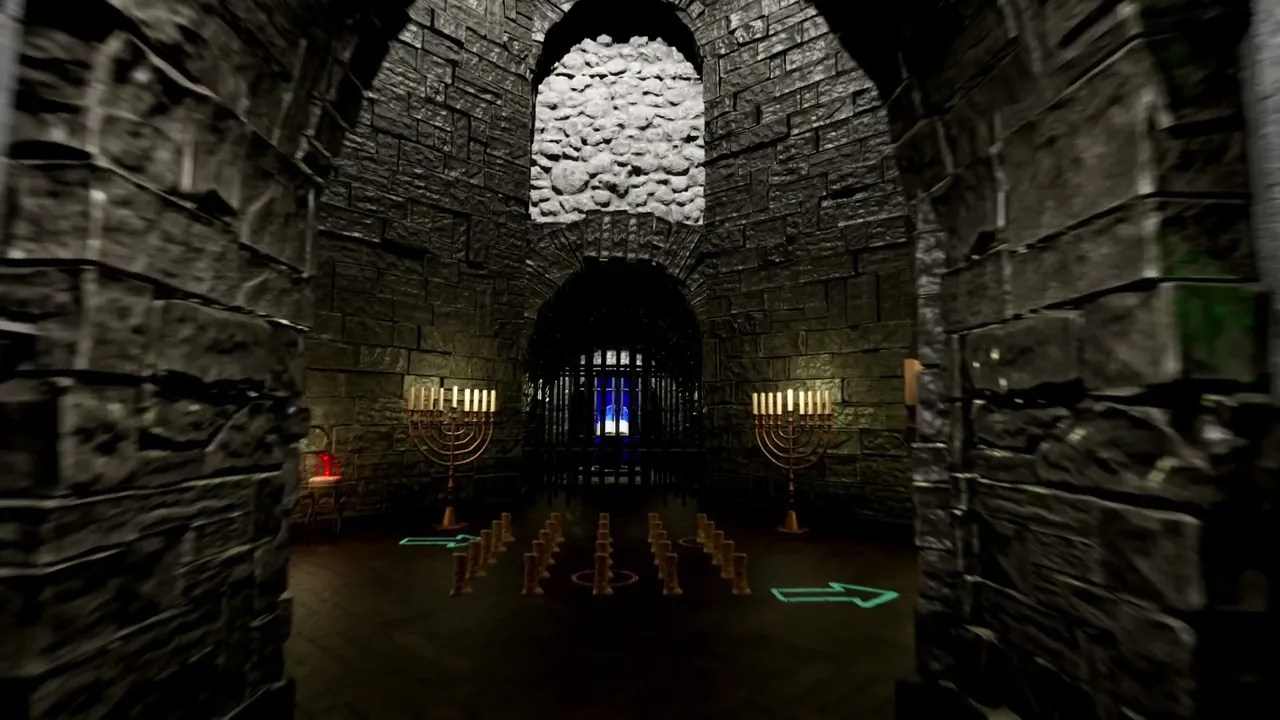
Mystery of the Arcana is a local multiplayer co-op escape room game. As the sole full-time student developer, I programmed all core mechanics, refined puzzle concepts with feedback from “Finest Escape”, and directed 4 student contributors for art and audio.
SYSTEM 01
Interaction & Puzzle System
MY TASK
My task was to conceptualize the co-op escape room puzzles and implement a modular interaction framework. I designed the puzzle mechanics from scratch and gathered professional feedback from real-world provider "Finest Escape" to refine game flow before engineering a decoupled system for raycasting, item handling, and multi-trigger conditions.
IMPLEMENTATION
I built a component-driven interaction pipeline paired with Blueprint Interfaces. The system performs continuous line tracing to trigger dynamic HUD prompts, manages object pickups, and evaluates cooperative puzzle logic (like timed simultaneous button presses) to notify target actors upon completion.
WHAT I LEARNED
I learned how to write fully decoupled Blueprint code using Interfaces and Event Delegates. This architecture allows player components to communicate with world objects and UI elements without creating hard class dependencies.
TECHNOLOGIES
Unreal Engine 5
Event-Driven Architecture
Co-Op Puzzle Logic
Blueprint Interfaces
BLUEPRINT - INTERACTION SYSTEM
Open code
SYSTEM 02
MY TASK
My task was to adapt all interaction and puzzle mechanics for network play, ensuring server-authoritative validation for simultaneous player inputs while delivering instant, smooth client-side feedback.
IMPLEMENTATION
I refactored the input and interaction pipeline into Unreal Engine 5's replication architecture. Enhanced Input actions trigger Server RPCs for authoritative state checks before executing targeted Client RPCs for local UI rendering. Critical puzzle state changes, such as door triggers, execute strictly on the server to keep all players perfectly synchronized without race conditions.
WHAT I LEARNED
I gained a solid understanding of Unreal's netcode, especially RPCs and variable replication. Refactoring my code taught me how to separate server game logic from client visuals, preventing lag and input conflicts.
TECHNOLOGIES
Unreal Engine 5
Server & Client RPCs
Network Authority
Blueprint — Replication
Open code